





DLLS 2026: The Last Mile Is Really a Trust Problem
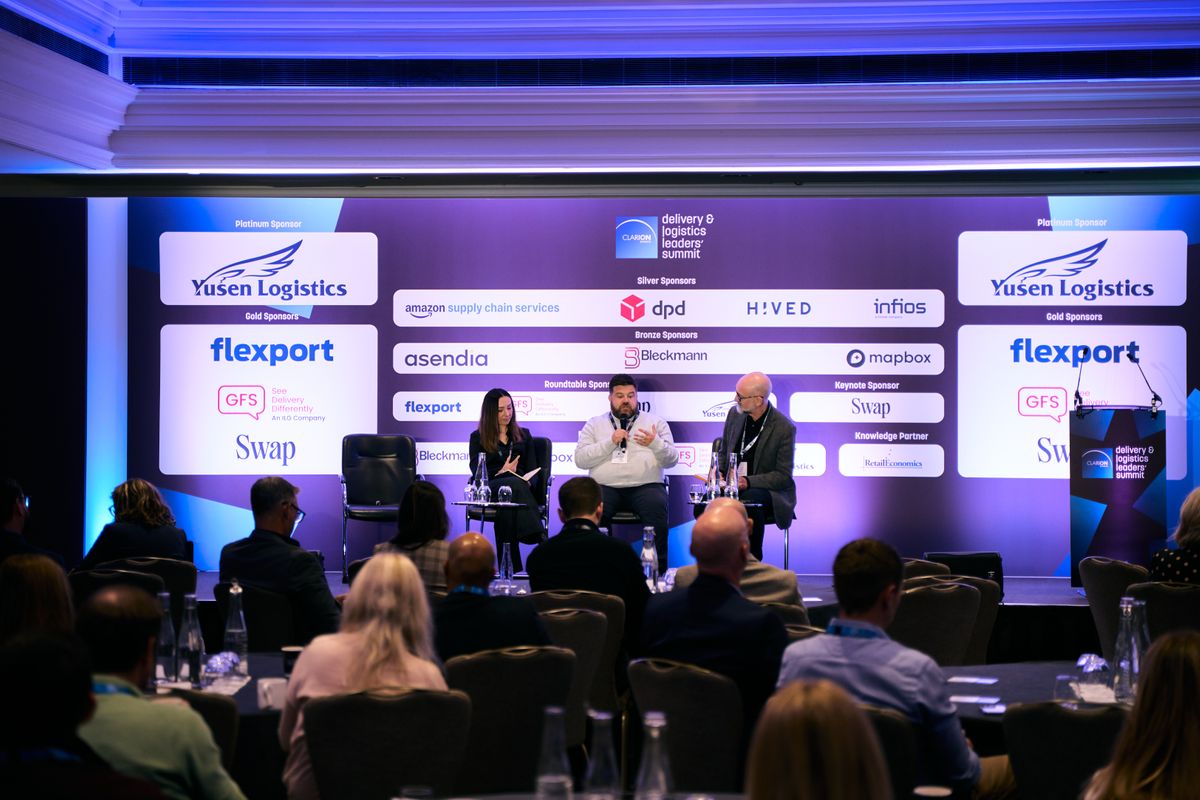
Having spent the day Co-Chairing parts of the Delivery & Logistics Leaders' Summit, one thing stayed with me.
We talk about logistics as an operational challenge. Increasingly, it looks like a trust and resilience challenge.
We covered technology, data, customer expectations, cost and the continuing unpredictability of supply chains. But underneath it all sat a simpler question: can I rely on you to do what you said you would do?
Delivery isn't something that happens after the customer experience. It is the customer experience. You can spend millions building a brand and acquiring a customer, and one missed delivery, one inaccurate promise, or an afternoon spent wondering where something has gone can undo a surprising amount of that work.
…so a few things stood out.
Resilience is bigger than the supply chain
We've spent years thinking about resilience in terms of alternative suppliers, routes, capacity and contingency plans. I think that's now too narrow.
We need resilient supply chains, of course. But we also need resilient businesses, teams and people. The people leading these organisations are dealing with constant disruption and making decisions quickly, often without all the information they'd like. Nobody can personally know everything they need to know — so part of resilience is knowing who to turn to when you don't know the answer.
That means building and actually using networks of colleagues, peers and experts: not collecting contacts, but knowing who has been there before, who will challenge your thinking, and who has the experience you're missing. There's an extraordinary amount of expertise around us. We need to get better at using it. Your network may be as important a resilience asset as your contingency plan.
Customers experience resilience as reliability
Customers don't care how complicated your network is. They care whether you kept your promise — which makes resilience part of the customer proposition, not just the operating model.
Logistics businesses have no shortage of metrics, but are we measuring what actually matters to the customer? A business can report excellent service levels while still disappointing a lot of individual customers. The question I kept coming back to was: what does this number look like through the customer's eyes?
Technology isn't the strategy
Unsurprisingly, AI and technology were everywhere, and the potential is real — from prediction and routing to automation, communication and exception management. But another layer of technology doesn't fix an unreliable process.
What interests me more is how technology helps people see problems earlier, access better thinking, make better decisions, and draw on the knowledge and experience of others when they need it. That's more interesting than simply replacing tasks.
The exception may matter more than the average
Most organisations design around the normal journey. Customers judge them on the abnormal one: a late vehicle, a missed collection, a damaged item, a delivery that won't arrive when promised.
The businesses that stand out won't eliminate every problem. They'll spot them earlier, take ownership, communicate and recover well. That's where operational excellence and customer experience become the same thing.
Moving things or keeping promises?
My biggest takeaway from DLLS 2026 is that resilience isn't simply about stronger supply chains. It's about businesses, teams and people being better able to respond when the plan changes — because it will. Part of that is getting better at drawing on the collective experience around us.
Logistics is the physical manifestation of a promise made to a customer. The interesting businesses will be those that think not just about how efficiently they move things, but how their operations, people and networks help them keep that promise.
One more conversation
One problem with conferences: we have great conversations, fill a notebook with ideas, then go back to the day job.
So on 4 November I'm running a post-event call for DLLS delegates. No presentations — just two questions: what did you hear at DLLS that was genuinely useful, and what have you actually done with it?
It's a chance to reconnect, compare notes, and put some of that collective experience to work. I look forward to seeing many of you there. Ping me if you’d like an invite.